
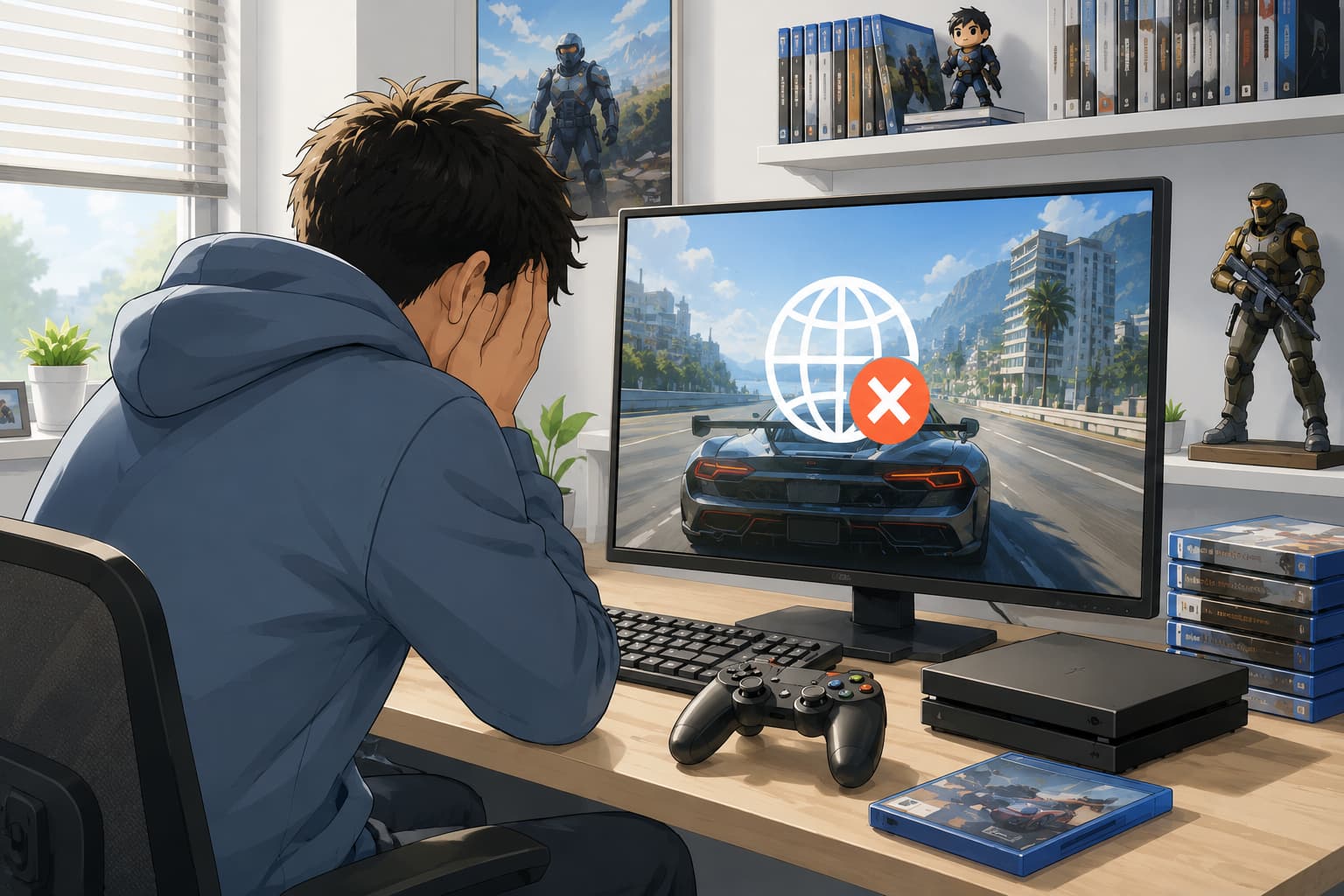
When you buy a game, do you actually own it? For most players the answer feels obvious, until the day a company switches off a server and the game they paid for simply stops working, forever. That exact scenario has ignited one of the largest consumer movements in the history of gaming, a campaign called Stop Killing Games that has pulled more than a million people, lawmakers across Europe, and the entire games industry into a fight over what ownership really means in the digital age. What began as one frustrated player’s reaction to a single shutdown has grown into a genuine reckoning, and the reverberations are still spreading.
The spark: a racing game that vanished
The movement traces back to a single, symbolic event. A major publisher shut down the servers for a popular always-online racing game, and because that game required a constant internet connection even for its largely single-player content, the shutdown rendered every copy completely unplayable. Players who had paid full price and sunk hundreds of hours into it were left with nothing, and their licenses were later revoked from their accounts entirely. The game they had bought did not just lose its online features; it ceased to exist. The estimated twelve million people who had played it discovered, all at once, that their purchase had come with a hidden expiry date the publisher alone controlled.
Days after that shutdown, a YouTuber known for a long-running series about digital preservation launched a campaign in response. His argument was simple and resonant: publishers should not be allowed to destroy games that people have already bought. The idea struck a nerve that had been raw for years, and the campaign spread rapidly through gaming communities, news outlets, and social media, drawing praise from developers, politicians, and players alike.
What the movement actually asks for
It is important to be precise about the demand, because it is more modest than critics sometimes suggest. Stop Killing Games does not ask companies to support their games forever, which everyone acknowledges would be unrealistic and expensive. Players understand that running servers costs money and that no business can maintain every title indefinitely. What the campaign asks for is narrower: that when a publisher decides to end a game, it must leave that game in a reasonably playable state before walking away.
In practice this might mean releasing a final patch that allows the game to run offline, or enabling players to host their own private servers once the official ones go dark. The goal is not perpetual maintenance but a dignified end of life, a way for a purchased game to keep functioning after the company stops profiting from it. Supporters frequently draw a parallel to the right-to-repair movement, comparing a remotely disabled game to a printer or smart device that stops working the moment its manufacturer withdraws support, even though the physical product still exists and was bought outright.
Ownership versus a license
Beneath the specific demand lies a much deeper question that the movement has forced into the open. When a consumer clicks a button marked Buy Now, they intuitively expect the same result as buying something in a physical shop: they own the thing, and no one can take it away. The legal reality of the digital economy is very different. In most cases the customer is not buying a product at all but purchasing a revocable license, a permission to access the software that the publisher can terminate under conditions buried in a user agreement almost no one reads.
This gap between what people feel they are buying and what they are legally getting is the true engine of the movement’s popularity. Research has shown that a sizable share of consumers are genuinely misled about the rights they acquire when they buy digital media. The publisher retains the data, the save files, and the keys to the servers, while the consumer, as one commentator put it, is left holding little more than the receipt. Stop Killing Games did not create this tension, but it dragged it into daylight and gave millions of people the language to describe why the loss of a game felt so much like theft.
The industry pushes back
The games industry did not welcome the campaign. Publishers and their trade representatives argued that a legal requirement to keep games playable after shutdown would be far more complicated and costly than it sounds. Many modern games are built on layers of licensed technology, proprietary middleware, and third-party services, and untangling all of that to produce a working offline version can be genuinely difficult. Industry voices raised concerns about intellectual property, about protecting confidential business information embedded in server code, and about the security and safety risks of releasing games that will no longer receive official support or patches. From their perspective, a blanket mandate risked being disproportionate and could discourage the online, live-service business models that now dominate the market.
A million voices meet the limits of law
The campaign’s most dramatic escalation was turning itself into a European Citizens’ Initiative, a formal mechanism that compels the European Commission to respond once a petition gathers a million verified signatures. Stop Killing Games cleared that bar decisively, collecting well over a million validated signatures across the European Union, alongside a substantial parallel petition in the United Kingdom. The initiative earned a public hearing in the European Parliament and a plenary debate, a level of political attention almost unheard of for a gaming issue.
Then came the anticlimax. After months of hearings and deliberation, the European Commission declined to propose any law forcing publishers to keep games playable, concluding that such an obligation would not be proportionate. It cited the familiar cluster of concerns: intellectual property rights, confidential business information, publisher costs, and potential cybersecurity risks in unsupported games. Instead of binding legislation, the Commission offered a voluntary industry code of conduct to be developed with publishers and consumer groups, along with an effort to raise awareness of the consumer rights that already exist. For a grassroots movement that had spent two years trying to turn “you own your games” from a slogan into a statute, it landed like a polite refusal.
Why it still matters
Yet it would be a mistake to read this as a defeat. The organizers said the outcome was not unexpected and that they had prepared for it, immediately pivoting to push for their goals to be written into a broader piece of upcoming digital-fairness legislation instead. And whatever the legislative result, the campaign achieved something less tangible but arguably more lasting. It generated over a million verified signatures, a democratic signal too large to ignore, and won named allies among lawmakers who now treat game preservation as a live political issue. It created a public record against which any future backsliding can be measured.
Most of all, it changed the conversation. Millions of players now understand, in a way they did not before, that the game library they have assembled is built on borrowed permissions rather than owned property, and they are no longer content to accept that quietly. The publishers kept their power this round, but the question Stop Killing Games raised is not going away. In an era when almost everything we buy is becoming a service that can be switched off from afar, a simple demand echoes well beyond gaming: if you sold it to me, you should not be able to take it away.